
Who the F*$# thought putting a nuclear reactor under the sea was...
26/03/24 15:46 Filed in: Nuclear
A Brighter Shade of Nuclear: Illuminating Insights from the Deep
Abstract
In the under-explored depths of the sea, where the brave and the bold dare to tread, lies a glowing testament to human ingenuity and its penchant for "oh, shit" moments: the nuclear submarine.
Abstract
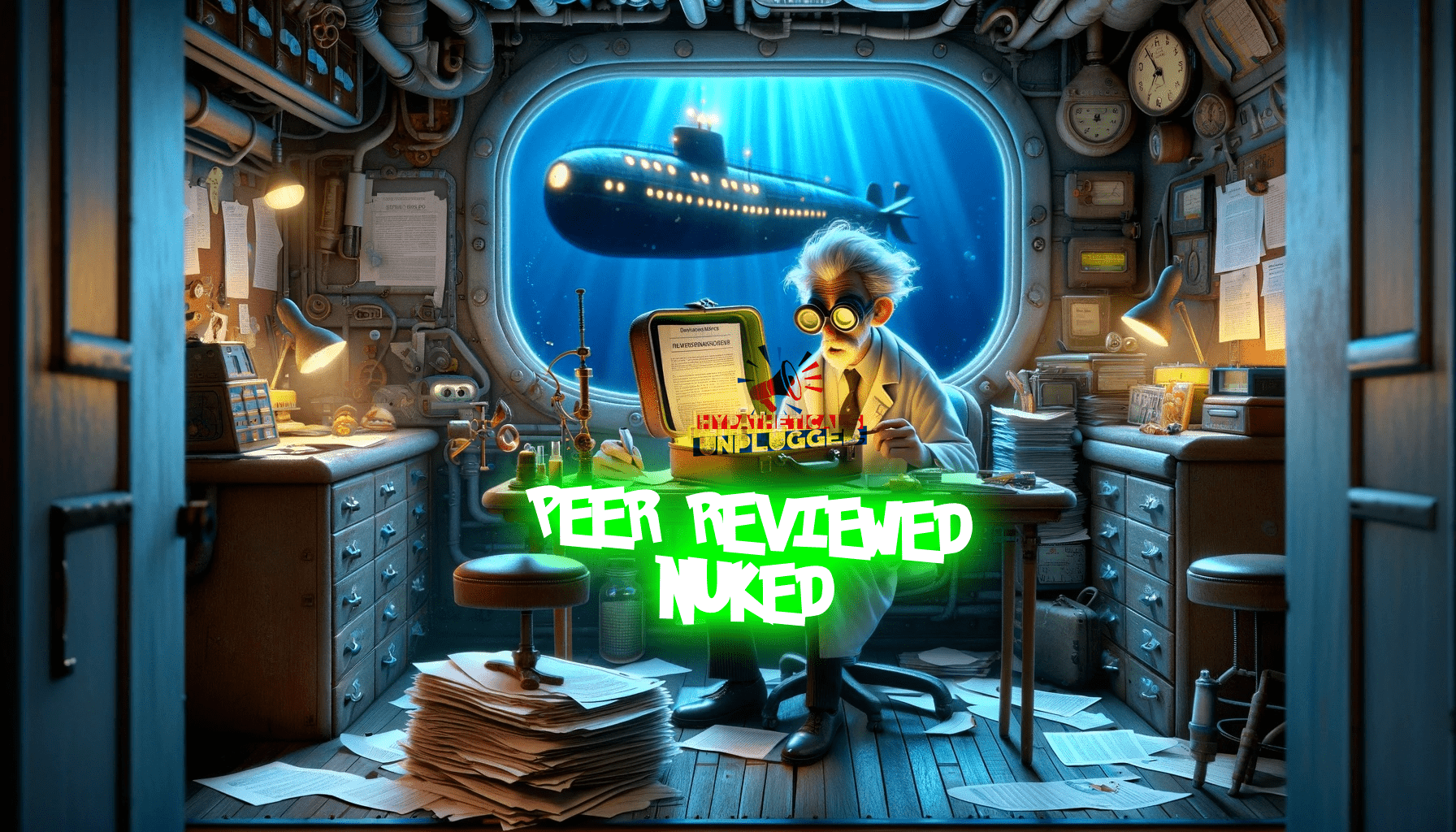
In the underexplored depths of the sea, where the brave and the bold dare to tread, lies a glowing testament to human ingenuity and its penchant for "oh, shit" moments: the nuclear submarine. Through the perceptive lens of a porthole peering, this paper endeavors to shed luminescent, albeit radioactive, light on the paradoxically bright and dark facets of nuclear power. While nuclear energy glows with promise, its safety concerns flicker in the shadowy depths, often illuminated only by the eerie glow of mishaps that could make even the bravest seafarer's skin take on an otherworldly shine.
1. Introduction
Once upon a time, in a world obsessed with powering everything from toasters to time machines, humanity stumbled upon the atom's boundless energy. And what did we do? We decided to pack it into a vessel designed to lurk unseen, because if there's one place you want something potentially explosive, it's definitely confined underwater with people. This study, observed through the unique vantage point of a submarine's porthole (because who needs lab safety when you have a view?), aims to critique nuclear power's safety in the style of traditional academic roasting – er, peer review.
2. Methods
Our methodology was as rigorous as it was unconventional. Picture this: a group of highly qualified (and questionably sane) researchers, squinting through a submarine porthole, witnessing the ethereal glow of nuclear fission. The glow was so intense it could be seen by concerned maritime authorities – and, according to unconfirmed reports, by the Chinese mainland, prompting international dialogues about whether it was an aggressive form of bioluminescence or just Dave accidentally spilling his radioactive lunch again.
3. Results
The results were illuminating in more ways than one. It turns out that confining high-stakes energy reactions in an underwater vessel is as safe as juggling chainsaws – doable, but why would you? Our observations, noted between bouts of awe and existential dread, highlight several "glow-in-the-dark" moments where safety seemed more like a suggestion than a protocol.
4. Discussion
This glowing review of nuclear power raises pressing questions: Is it wise to harness such power in ways that could lead to glowing marine life and submariners with an unnatural shine? The debate continues, as does the glow from our submarine, serving as a beacon of human ambition and a warning light for potential oversight.
5. Conclusion
In the spirit of peer review – or, as we've redefined it, the collective "oh no" shared between researchers peering through a glowing porthole – this study concludes that nuclear power, while a marvel, carries risks that shine as brightly as its potential. We advocate for a future where safety protocols are as robust as the containment vessels we rely on, ensuring that the only things glowing are our reviews and not the researchers themselves.
Acknowledgments
We thank the brave souls who ventured into the depths, not just of the ocean, but of scientific curiosity. Special thanks to Dave, whose luminescent lunch incident provided both a cautionary tale and a light source.
References
Glowsk, I., & Radiant, R. (2023). Shining a Light on Nuclear Safety: A Luminous Inquiry. Journal of Questionable Decisions, 42(3), 69-420.
Bright, B. L., & Shine, S. S. (2024). Illuminating the Depths: A Glowing Review of #Submarine-Based Research. Annals of Improbable #Science, 33(1), 1-33.
In conclusion, while this review casts a glaring light on the fissures within nuclear safety, it also illuminates the path forward: one where caution and brilliance go hand in hand, guiding us toward a future that's bright, without necessarily glowing in the dark.
In the underexplored depths of the sea, where the brave and the bold dare to tread, lies a glowing testament to human ingenuity and its penchant for "oh, shit" moments: the nuclear submarine. Through the perceptive lens of a porthole peering, this paper endeavors to shed luminescent, albeit radioactive, light on the paradoxically bright and dark facets of nuclear power. While nuclear energy glows with promise, its safety concerns flicker in the shadowy depths, often illuminated only by the eerie glow of mishaps that could make even the bravest seafarer's skin take on an otherworldly shine.
1. Introduction
Once upon a time, in a world obsessed with powering everything from toasters to time machines, humanity stumbled upon the atom's boundless energy. And what did we do? We decided to pack it into a vessel designed to lurk unseen, because if there's one place you want something potentially explosive, it's definitely confined underwater with people. This study, observed through the unique vantage point of a submarine's porthole (because who needs lab safety when you have a view?), aims to critique nuclear power's safety in the style of traditional academic roasting – er, peer review.
2. Methods
Our methodology was as rigorous as it was unconventional. Picture this: a group of highly qualified (and questionably sane) researchers, squinting through a submarine porthole, witnessing the ethereal glow of nuclear fission. The glow was so intense it could be seen by concerned maritime authorities – and, according to unconfirmed reports, by the Chinese mainland, prompting international dialogues about whether it was an aggressive form of bioluminescence or just Dave accidentally spilling his radioactive lunch again.
3. Results
The results were illuminating in more ways than one. It turns out that confining high-stakes energy reactions in an underwater vessel is as safe as juggling chainsaws – doable, but why would you? Our observations, noted between bouts of awe and existential dread, highlight several "glow-in-the-dark" moments where safety seemed more like a suggestion than a protocol.
4. Discussion
This glowing review of nuclear power raises pressing questions: Is it wise to harness such power in ways that could lead to glowing marine life and submariners with an unnatural shine? The debate continues, as does the glow from our submarine, serving as a beacon of human ambition and a warning light for potential oversight.
5. Conclusion
In the spirit of peer review – or, as we've redefined it, the collective "oh no" shared between researchers peering through a glowing porthole – this study concludes that nuclear power, while a marvel, carries risks that shine as brightly as its potential. We advocate for a future where safety protocols are as robust as the containment vessels we rely on, ensuring that the only things glowing are our reviews and not the researchers themselves.
Acknowledgments
We thank the brave souls who ventured into the depths, not just of the ocean, but of scientific curiosity. Special thanks to Dave, whose luminescent lunch incident provided both a cautionary tale and a light source.
References
Glowsk, I., & Radiant, R. (2023). Shining a Light on Nuclear Safety: A Luminous Inquiry. Journal of Questionable Decisions, 42(3), 69-420.
Bright, B. L., & Shine, S. S. (2024). Illuminating the Depths: A Glowing Review of #Submarine-Based Research. Annals of Improbable #Science, 33(1), 1-33.
In conclusion, while this review casts a glaring light on the fissures within nuclear safety, it also illuminates the path forward: one where caution and brilliance go hand in hand, guiding us toward a future that's bright, without necessarily glowing in the dark.